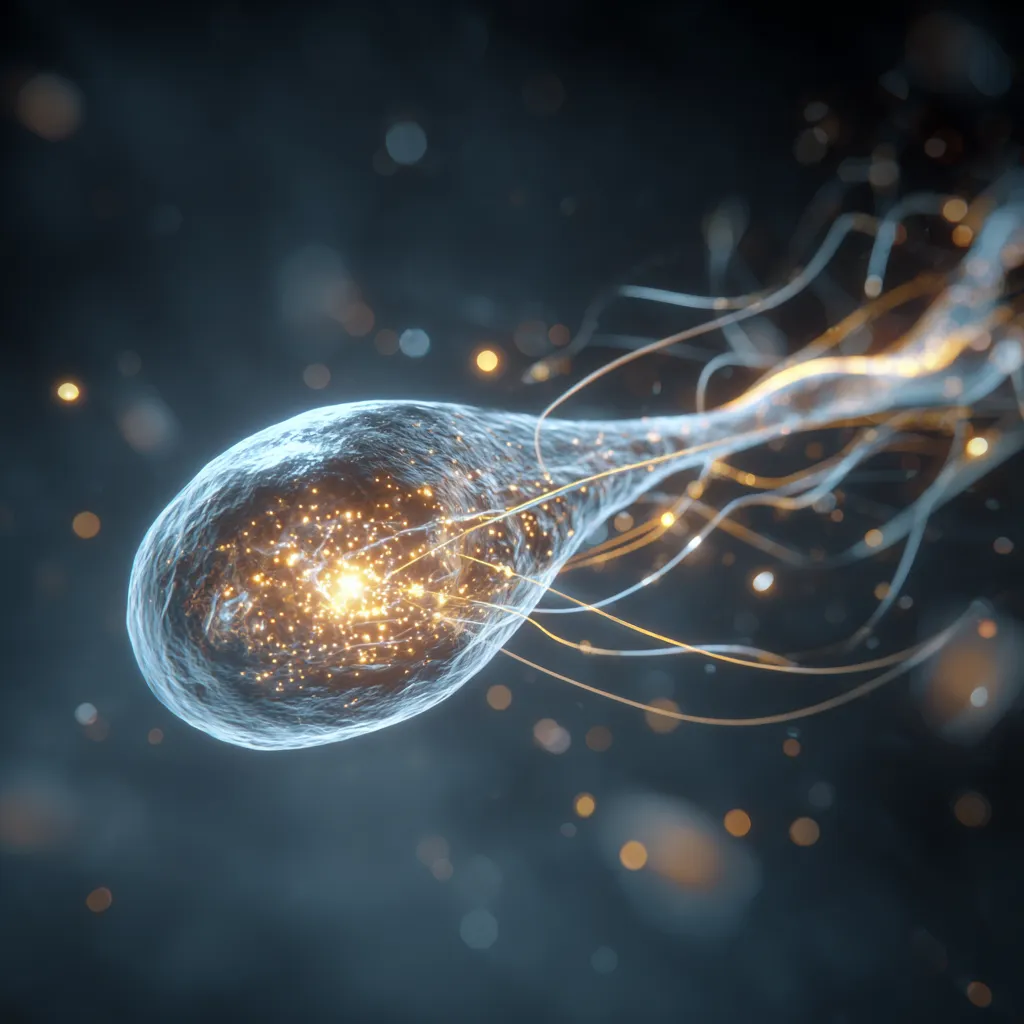
Sperm as Epigenetic Messengers: How Men Pass Down Stress Through microRNAs
Sperm as Epigenetic Messengers: How Men Pass Down Stress Through microRNAs
(Why a man’s emotional life, trauma, and stress history can be written directly into his sperm — and inherited by his future children)
When people talk about fertility, almost all attention falls on the female body: the eggs, the hormones, the cycles, the inflammation.
But a massive scientific revolution is happening quietly in male reproductive biology — one that completely rewrites how we understand inheritance:
Sperm don’t just deliver DNA. They deliver information.
And a major part of that information is carried through microRNAs.
These tiny molecules can:
rewrite gene expression
influence early embryo development
alter stress responses in offspring
modulate brain development
shape metabolic pathways
carry emotional and environmental memories
What a man lives, feels, fears, suppresses, or endures — especially in the months before conception — can be biologically imprinted into his sperm.
Let’s explore this hidden universe.
The Hidden Language of Sperm: microRNAs
microRNAs (miRNAs) are small non-coding RNAs that regulate gene expression.
You can think of them as:
molecular post-it notes
telling genes when to turn on or off.
Sperm contain a specialized set of these molecules — small but powerful.
And they change in response to:
chronic stress
trauma
depression
anxiety
inflammation
environmental toxins
diet
sleep deprivation
exercise patterns
This means sperm carry epigenetic memories.
How Stress Rewrites microRNAs in Sperm
Men exposed to stress — emotional, psychological, financial, physical, relational, or early life adversity — show profound changes in their sperm microRNA profile.
Key findings include:
⭐ Upregulation of stress-linked microRNAs
(such as miR-34c, miR-449a, miR-375)
These miRNAs influence:
HPA axis sensitivity
stress reactivity in offspring
cortisol regulation
brain development
⭐ Suppression of resilience-linked microRNAs
This affects emotional stability and metabolic health in the next generation.
⭐ Altered microRNAs that affect embryo development
Some microRNAs directly regulate the first few cell divisions of the embryo.
⭐ Reduced sperm quality independent of DNA fragmentation
This means even when DNA is “normal,” the epigenetic layer may still be altered.
Stress doesn’t have to break DNA to affect fertility.
It just has to change the instructions delivered with it.
The Extraordinary Part: These Epigenetic Messages Are Delivered at Conception
When sperm fertilize the egg, they transfer:
DNA
histone marks
chromatin structure
and a complex package of microRNAs
These microRNAs go straight into the embryo and begin influencing:
cell cycle control
placental development
early brain patterning
metabolic pathways
stress hormone receptor sensitivity
inflammation signaling
The embryo doesn’t just inherit genes.
It inherits gene regulation patterns.
How Men Pass Down Stress: The MicroRNA Mechanism
Here is the step-by-step process:
1. Man experiences stress
His body releases cortisol, epinephrine, inflammatory cytokines.
2. The testes respond
Testicular cells alter the profile of microRNAs packaged into developing sperm.
3. The altered microRNAs enter sperm during maturation
Even late-stage sperm can acquire new microRNA signatures.
4. During conception, microRNAs enter the egg
These microRNAs bind to maternal mRNA.
5. They alter early embryonic gene expression
This shapes:
cortisol sensitivity
neuronal wiring
emotional resilience
metabolic regulation
immune function
This is how paternal stress becomes biological inheritance.
The Research No One Talks About
Animal and human studies reveal:
🧬 Children of stressed fathers show:
higher baseline cortisol
increased anxiety
altered amygdala development
higher risk of depression
metabolic dysregulation
greater inflammation markers
All without any change in DNA sequence.
This is purely epigenetic inheritance.
🧬 Men who experienced trauma in childhood
show altered microRNA patterns decades later.
🧬 Men with high anxiety
show microRNAs associated with HPA axis hyperactivity.
🧬 Men who improve lifestyle
reverse many of these microRNA changes within 3 months — a full sperm cycle.
This is incredibly hopeful.
It means epigenetic damage is not permanent.
What Controls Healthy microRNA Patterns in Sperm?
The big regulators are:
⭐ Sleep
Restores normal microRNA balance.
⭐ Exercise
Improves anti-inflammatory miRNAs.
⭐ Anti-inflammatory diet
Reduces oxidative stress miRNAs.
⭐ Stress reduction
Lowers HPA-linked microRNAs.
⭐ Omega-3 fatty acids
Normalize cell membrane signaling.
⭐ Gut microbiome
Influences systemic inflammation and sperm RNA content.
⭐ Emotional processing
Reduces chronic HPA activation.
⭐ Healthy circadian rhythm
Regulates melatonin-driven testicular repair.
These are not “lifestyle tips.”
They are biological sperm programming signals.
The Big Truth
Men are not passive contributors in fertility.
They are not just “DNA carriers.”
Men pass down:
experiences
stress
emotional patterns
trauma resilience
metabolic tendencies
inflammation profiles
— through epigenetic messengers embedded in sperm.
This is not about blame.
It is about power.
Because microRNAs can change — quickly — with:
three months of lifestyle shifts
emotional healing
reducing stress load
improving sleep
addressing trauma
nourishing the body
In the same way women prepare their bodies for conception,
men must prepare their epigenetic signature.
Sperm are not just genetic material.
They are messages.
And men can choose what message they send.